

9 Anticipatory set examples for lesson plans
Published on 6 min read


In this guide
Anticipatory sets, also sometimes called hooks, bridges, attention-grabbers, or set inductions, take place early on in your lesson when you have the opportunity to get your students excited for what’s to come. They can be any number of activities aligned with your learning objectives that set the stage for learning by engaging students’ prior knowledge and piquing their interest.
Here are a few of my favourite ways to get the ball rolling:
1) Ask an open-ended question
- What if…?
- Why do you think…?
- What are the advantages/disadvantages of…?
Asking an open-ended question is an effective way to get your students thinking deeply about the content at hand. By considering the options, forming opinions – and maybe even engaging in a bit of light debate on the topic – your students will become intellectually invested in the subject at hand.

2) Read a story
This is one of my favourite activities for introducing younger students to a new topic. These days there’s a picture book for every topic imaginable, and kids love story time. Engaging in a familiar activity is a comfortable way to introduce an unfamiliar subject.
Don’t want to be too on the nose? No problem – there are tons of books out there that are allegories for more serious subjects, and analysing that is a powerful exercise for your students. Think The Lorax, The Giving Tree, and Animal Farm.
3) Use a prop
This is my number one as a museum educator! The benefits of object-based learning are innumerable, and having a physical object at hand brings the subject to life in a way words in a book or on a screen just don’t. Additionally, using a prop is an exciting way to engage with tactile learners.
Here are a few examples:
- Flowers to begin a science lesson on photosynthesis
- Paintbrushes and canvas to begin a lesson involving looking at art
- A historical artefact – like a horseshoe – to begin a lesson on colonial times
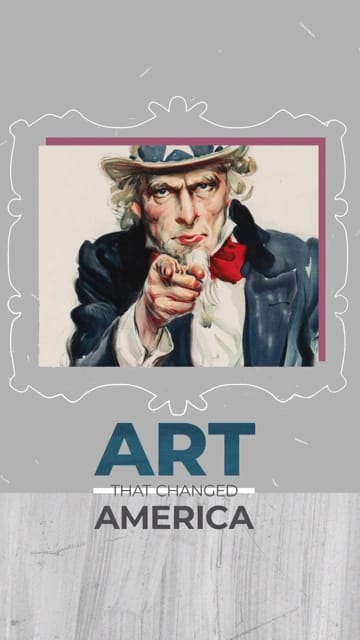
4) Study art
Another one that’s close to my heart! Art can evoke emotion, pique curiosity, and create connections between the past and today. Head to your local museum or gallery, project an engaging piece in your classroom, or engage with some of our available resources.
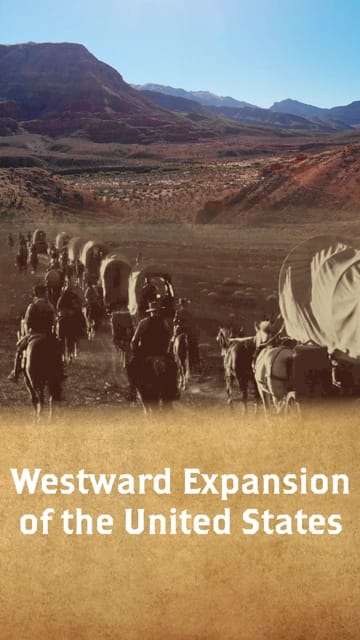
Here’s a piece I’ve used many times in the past to begin a lesson on westward expansion:

What do you see here? Who are these people? Is this a real or imagined event? These are just a few ways to jump into utilising art and inquiry in your anticipatory set.
Check out the painting in the series on the Westward Expansion here.
5) Incorporate smell
Have you ever been hit by a scent that instantly transported you to a specific place and time? Maybe a plasticky scent that reminds you of your childhood, or a sweet, spicy smell that evokes memories of baking biscuits with your grandmother?
Research shows that smell is a particularly powerful learning tool, since your sense of smell is deeply connected to memory and emotion. It’s also a great conversation starter.
Consider a scent that may be present in the world of a book you’re teaching, or in a specific place or time period you’re exploring. Essential oils and perfume samples are a convenient way to safely bring these scents into your classroom.
6) Play a game
Who doesn’t love games? If you want to promote excitement about a topic while getting your students actively involved in the learning process, a game is a great way to begin a lesson. While there are many longer games out there that can teach powerful history lessons (Monopoly, Catan), you may not have time for that in your lesson.
Some quick, easy games to incorporate that will have your students eagerly guessing at the topic at hand include charades, hangman, and Pictionary. It’s an easy way to get your students racking their brains for the answer – providing you with important insight into their prior knowledge of the subject.
7) Skimming
If you’re using a textbook, novel, or other written works in your classroom, you already have a place to start your lesson. Ask your students to quickly skim the pages they’ll be using, and make inferences about what they’ll be learning. Guessing at what’s to come is a fun way to increase excitement about the content.
8) Play a song
Hearing music activates the brain in a unique way. Research has shown that when we hear music, more of our brain is activated than when we experience nearly anything else.
Our limbic system, which is in charge of feelings and long-term memories, activates. The melodies we hear (think catchy jingles in commercials) help information to stick in the long-term memory. Therefore, music is a great way to understand and remember important information – obvious goals when you’re teaching a lesson!

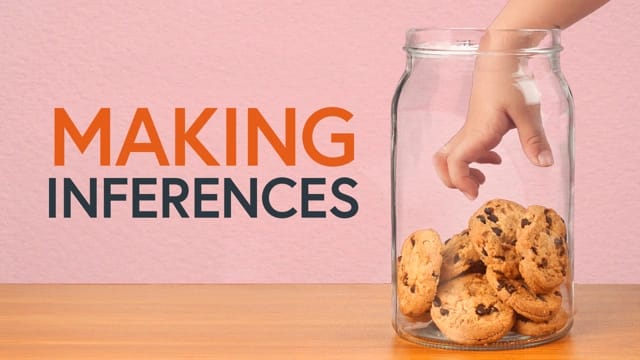
9) Watch a video
There are innumerable types of visual media accessible today, so it shouldn’t be a problem to find a video that will introduce new content to your students. The challenging part is choosing the right video.
Short (5-10 minutes) keep students fully engaged and allow you to deliver them in context. Breaking down a video into even shorter clips will allow you to scaffold the content to your specific needs. ClickView has a video for almost any topic you’ll cover!
Resources
- Adams, Kathleen. (2015). Back to the Future?: Emergent Visions for Object-Based Teaching in and Beyond the Classroom. Museum Anthropology. 38. 88-95. 10.1111/muan.12085.
- Bauman, D. J., Glass, G. V, & Harrington, S. A. The effects of the position of an organizer on learning meaningful verbal materials (Research Paper No. 24). Laboratory of Educational Research, University of Colorado, 1969.
- Corkill, A. J. (1992). Advance organizers: Facilitators of recall. Educational Psychology Review, 4, 33–67.
- Luiten, J., Ames, W., & Ackerson, G. (1980). A meta-analysis of the effects of advance organizers on learning and retention. American Educational Research Journal, 17(2), 211–218.
- Marzano, R.J., Pickering, D.J., & Pollock, J.E. (2001). Classroom instruction that works: Research-based strategies for increasing student achievement. Alexandria, VA: Association for Supervision and Curriculum Development.
- Mayer, R. (1979). Twenty years of research on advance organizers: Assimilation theory is still the best predictor of results. Instructional Science, 8, 133–167.
- Oliver, S. (2012). Stop and Smell the Roses: Incorporating smell as a multisensory learning tool in the university English classroom. Teaching Innovation Projects, 2(2). Retrieved from https://ojs.lib.uwo.ca/index.php/tips/article/view/3591
- Schuck, R.F. (1969). The effects of set induction upon pupil achievement, retention, and assessment of effective teaching in a unit on respiration in the BSCS curricula. Educational Leadership, 2(5), 785-793. Retrieved from http://www.ascd.org/ASCD/pdf/journals/ed_lead/el_196905_schuck.pdf
- Townsend, M.A.R. & Clarihew, A. (1989). Facilitating children’s comprehension through the use of advance organizers. Journal of Literacy Research, 21(1) 15-35.
- Trimble M, Hesdorffer D. Music and the brain: the neuroscience of music and musical appreciation. BJPsych Int. 2017 May 1;14(2):28-31. doi: 10.1192/s2056474000001720. PMID: 29093933; PMCID: PMC5618809.
- West, Brandon K. and Deutsch, Anne C. (2017) “Anticipatory Sets: Setting the Stage for Learning,” LOEX Quarterly: Vol. 44: No. 2, Article 3. Available at: https://commons.emich.edu/loexquarterly/vol44/iss2/3
Share to

Jessica Pastore
briefcase iconMuseum Educator
Jessica Pastore is a museum educator living and working in New York City. Her background is in social studies education and world history. She has taught in both classroom and gallery settings for the past ten years.
Other posts



Want more content like this?
Subscribe for blog updates, monthly video releases, trending topics, and exclusive content delivered straight to your inbox.
